

Is there anything more rustic and charming than a mortar and pestle? The word pesto comes from the Italian verb pestare, which means “to pound” or “to crush.” There is something deeply satisfying about smashing together fresh herbs by hand. Whether you’re making a simple salsa or a vibrant pesto like this one, the process feels almost meditative — and somehow it really does taste better when everything is crushed together with a little patience and care. It may leave you with a slightly sore wrist, but it’s absolutely worth the effort.
Pesto is a fragrant, bright green sauce traditionally made with fresh basil, garlic, pine nuts, parmesan cheese, and good olive oil. It’s incredibly versatile and can elevate even the simplest dish. Toss it with pasta, spoon it over roasted vegetables, stir it into salads, or spread it onto a crusty baguette. One of my favorite ways to enjoy it is as a spread topped with sardines — a simple combination that turns something humble into something truly special.
Homemade basil pesto is one of the easiest sauces you can make from scratch, and the flavor is far superior to anything you’ll find in a jar. When fresh basil is blended with garlic, pine nuts, parmesan, and olive oil, it creates a rich, herbaceous sauce that’s both simple and incredibly flavorful. Whether you’re making classic basil pesto for pasta or using it as a spread, dip, or finishing sauce, this traditional recipe is a staple every home cook should know.
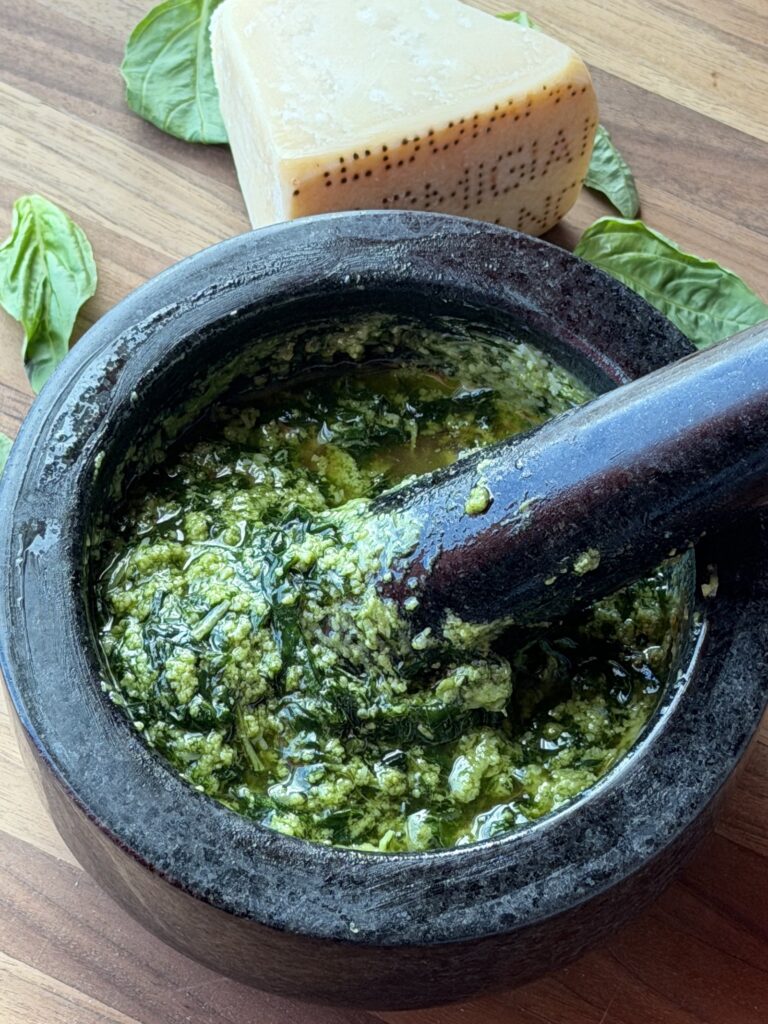
Why Make Pesto in a Mortar and Pestle?
While pesto is often made in a food processor for convenience, using a mortar and pestle creates a noticeably different texture and flavor. Crushing the basil gently releases its aromatic oils without bruising the leaves too aggressively. The garlic becomes creamy, the pine nuts break down into a rich paste, and the olive oil emulsifies slowly into the mixture.
The result is a pesto that is slightly rustic, deeply fragrant, and beautifully textured — closer to the traditional pesto Genovese that originated in Liguria, Italy.
How to Use Pesto
Fresh pesto is incredibly versatile and can instantly elevate simple ingredients. Toss it with warm pasta, spoon it over roasted vegetables, spread it on sandwiches, or stir it into salads. It also pairs beautifully with grilled fish or chicken.
One of my favorite simple combinations is spreading pesto onto toast and topping it with sardines — a surprisingly luxurious bite that takes only minutes to prepare.
Perfect Mortar and Pestle Basil Pesto
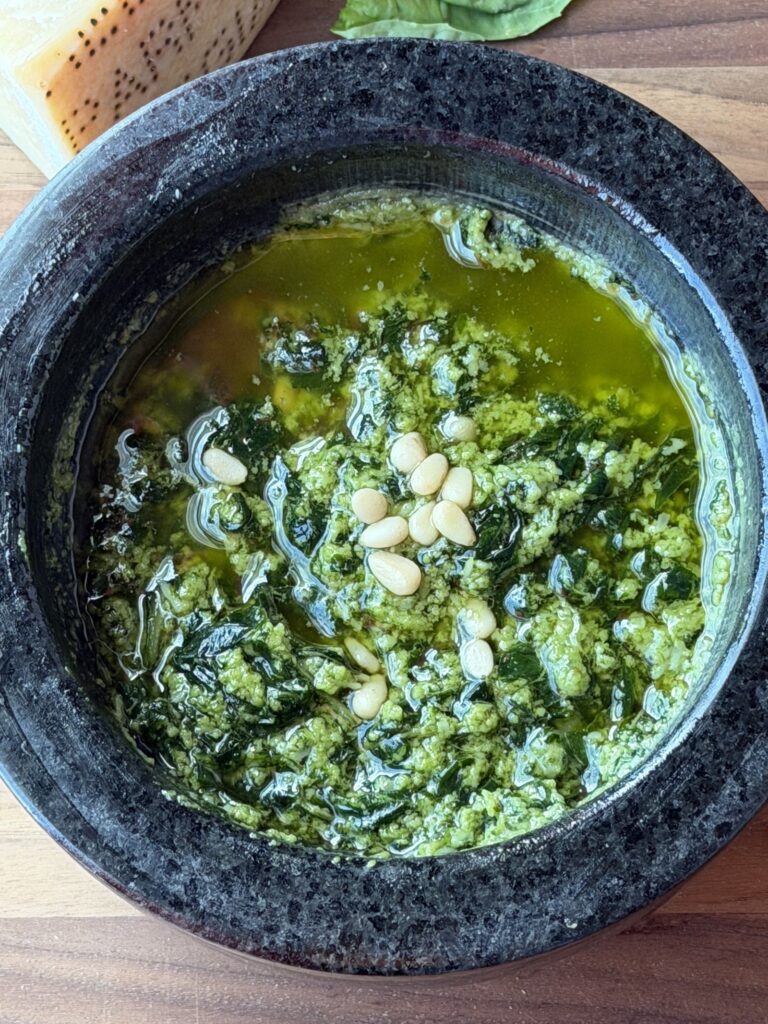
This classic basil pesto is made the traditional way using a mortar and pestle. Fresh basil, garlic, pine nuts, parmesan, and good olive oil are gently crushed together to create a vibrant, fragrant sauce with a slightly rustic texture. Making pesto by hand releases the natural oils of the herbs and creates a depth of flavor that is difficult to achieve with a food processor.
Ingredients
Instructions
-
Add the garlic and a pinch of salt to the mortar. Pound until it forms a smooth paste.
-
Add the pine nuts and crush them into the garlic until the mixture becomes creamy.
-
Add the basil leaves in batches, pressing and grinding them against the sides of the mortar until the herbs break down and release their oils.
-
Stir in the grated parmesan cheese.
-
Slowly drizzle in the olive oil while mixing until the pesto becomes smooth but still slightly textured.
-
Taste and adjust with additional salt or a small squeeze of lemon if desired.
Note
Use fresh basil:
Bright, fragrant basil is essential for a vibrant pesto. Avoid leaves that are wilted or darkened.
Work in batches:
Adding the basil a handful at a time makes it easier to crush and helps create a smoother texture.
Add olive oil slowly:
Drizzling the olive oil gradually allows the pesto to emulsify and become silky without becoming overly loose.
Taste as you go:
Depending on the saltiness of your parmesan, you may need only a small pinch of salt.
Storage tip:
If storing pesto in the refrigerator, cover the surface with a thin layer of olive oil to help preserve its color and freshness.

